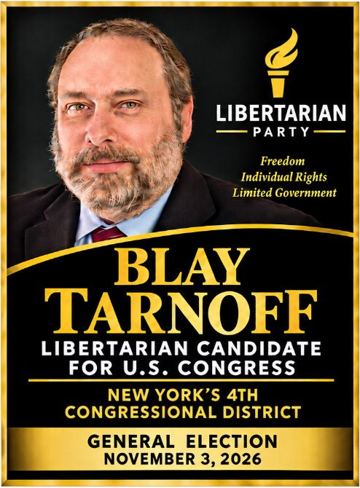
Blay Tarnoff Launches Campaign for Congress
Libertarian Blay Tarnoff, on the November 3 ballot in NY District 4 in southern Nassau County, campaigns against socialism and for a federal Civil Rights Bureau.
By Tarnoff for Congress Campaign
Articles from Free New York about opinion.
Libertarian Blay Tarnoff, on the November 3 ballot in NY District 4 in southern Nassau County, campaigns against socialism and for a federal Civil Rights Bureau.
Vincent O'Neill lays out a reform agenda: end taxpayer-funded primaries, equalize ballot access, expand debates, require photo ID, restrict absentee voting and change legislative procedure and campaign finance.
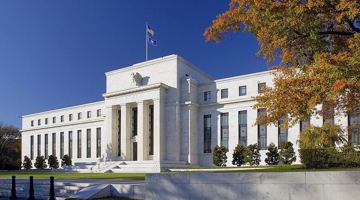
Richard Purtell argues that giving all 12 regional Federal Reserve Banks equal weight would improve representation, transparency, financial stability and public trust.
James Harris outlines three ways to gather roughly 60,000 petition signatures: a traveling advocate, grassroots bootstrapping and a lottery-ticket gamble.
Proposes free-market answers to the “affordability crisis”: tax-free rent from one tenant, curb rights, unregulated child care and tripled compensation for eminent domain.
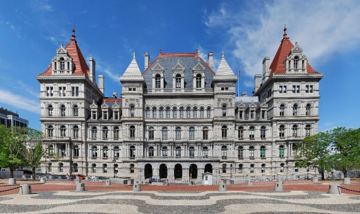
LPNY answers Governor Hochul’s 2026 State of the State, arguing her “affordability” agenda means more taxes and control and calling for tax relief instead.
Warns that state-pushed efficiency and consolidation drives, such as those in Chautauqua County, threaten local home rule and rural liberty.
Argues that neither Democrats nor Republicans have solved immigration enforcement problems and that both parties fail on inflation, housing and other costs.
Proposes reforms to the court system: majority-based jury verdicts after repeated votes, an end to jury stacking, limits on bail and a “loser pays” rule for failed suits.
Argues that Republicans and Democrats raised New York’s ballot access thresholds after a strong Libertarian vote, and proposes reforms including a shared petition window and more signatures per voter.
Proposes “A Just Immigration Policy”: sponsorship by individual citizens, a five-year wait without taxpayer aid, no amnesty and an end to taxpayer-funded services for illegal immigrants.
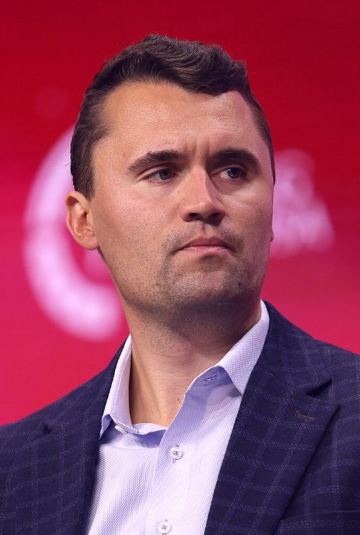
LPNY condemns the assassination of Charlie Kirk and argues that political violence feeds state power, naming the state as the primary adversary.
Rick Miller responds to popular online claims about the national debt, arguing that spending on defense and entitlements, not taxes on the rich or immigrants, is the core problem.
Proposes withdrawal of consent from school taxes, phased-out charter school funding and a property-tax overhaul to give families educational choice.
A Libertarian plan to cut $6.3 trillion from the federal budget, covering military spending, agency eliminations, student loans, gold purchases and sequencing tax cuts after spending cuts.
An op-ed urging the rescinding of PREP Act EUA Amendment 12 and opposing New York bills that would require reporting adult vaccinations to the state.
A Libertarian plan to balance the federal budget in one year through spending cuts, eliminating agencies, ending foreign aid and military compensation payments, and repaying debts.
An op-ed arguing that landlords and tenants, and companies and consumers, have equivalent motives, so neither side justifies government intervention.
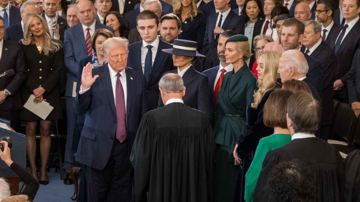
LPNY marks the inauguration of President Trump, promising to back efforts that expand liberty and to oppose any that infringe on it.
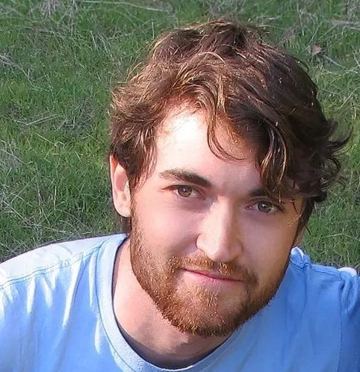
LPNY welcomes President Trump's pardon of Silk Road founder Ross Ulbricht and calls for an end to harsh sentences for nonviolent crimes.
LPNY condemns the killing of Robert Brooks at Marcy Correctional Facility and demands a full investigation and prison reform.
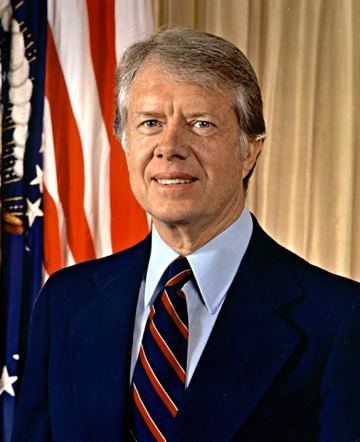
LPNY credits Jimmy Carter's deregulation and humanitarian work while criticizing the growth of federal agencies and economic planning under his administration.
LPNY argues that New York's high taxes, not the federal SALT deduction cap, are the real problem and urges lower state taxes and spending.
Former LPNY Chair Mark Axinn writes that Libertarians should keep fighting for ballot choice and asks readers to donate to the party.
Jim Ostrowski urges the national and state parties to make direct citizen action their main strategy after another disappointing election, and offers to present his programs.
Pietro Geraci condemns the state's seizure and killing of Peanut the Squirrel and Fred the Raccoon and urges readers to demand accountability.
Vincent O'Neill proposes replacing the welfare state with voluntary human action, including a Celtic-style fosterage system, divorce and custody reforms, and abortion policy changes.
Thomas Quiter argues that Guilford's proposed junk storage law would burden farmers, low-income and elderly residents and invite neighbor disputes.
A long essay arguing that U.S. military actions without a declaration of war are unconstitutional and proposing compensation payments, trade and a smaller military budget.
Mark Braiman endorses Republican Tim Kelly for the 127th Assembly District, citing votes on wetlands law, redistricting and the gas ban.
A seven-point libertarian proposal for ending the Israel-Hamas war and building lasting peace, including a ceasefire, accepted borders, free trade and a non-interventionist U.S. policy.
Wheelchair user Thomas Quiter describes years trapped at home by unreliable mobility equipment and presents his Mobility Independence Foundation's open-source wheelchair plan.
A former LPNY vice-chair argues against ranked choice voting, citing how New York's ballot-access rules were changed after the 2018 Libertarian result.
Mark Braiman argues against the statewide ban on gas in new buildings, citing energy projections for upstate New York and what the Cazenovia Town Council should do.
An opinion piece arguing that recent presidents of both major parties committed war crimes and that voters should instead elect candidates from the Libertarian Party.
Rich Purtell argues that a ban on natural gas in new homes would hurt upstate New York and that code enforcement officials should say they will not enforce it.
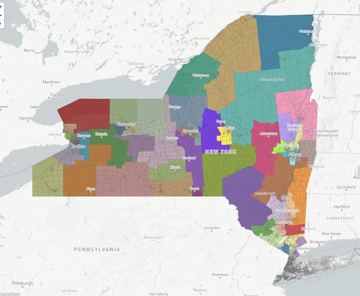
Mark Braiman argues the proposed Assembly map splits small counties such as Madison in violation of the state constitution and offers his own alternative map.
Madison County Chair Mark Braiman examines how Cazenovia College came to close, and asks what the closure means for zoning, the Excelsior Scholarship and local policy.